
By Ashvini Ranjan
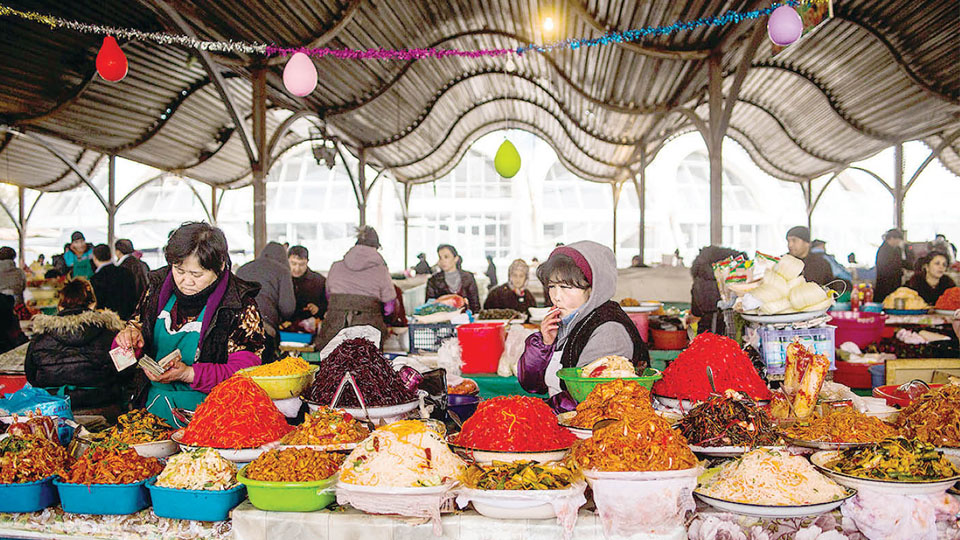
As we departed on our tour of the city, Akbar reeled off the city’s history of how it changed hands from the Arabs to the Mongols and subsequently ruled by Timur and Shaybandis. It was colonised by Russia in 1917 and Uzbekistan gained independence in 1991. “It was Islam Abduganiyevich Karimov, our first President who changed the fortunes of our country,” claimed Akbar, our guide. Though a controversial figure and is accused of measures which violated human rights, Karimov brought stability to the country and prevented radical Islamic elements taking a foothold in the country. “To me, he is like your Mahatma Gandhi,” he announced. Though Tashkent was the capital and the country’s largest city and the seat of administration, the real jewels of Uzbekistan were the cities of Khiva, Bukhara and Samarkand. Tashkent is more a showcase city with museums, shopping centres and tombs of recent times. The earthquake of 1966 reduced the city to rubble and with it the many historical monuments. Following the disaster, the city was rebuilt and modelled on Soviet architectural styles. The four-lane roads, manicured gardens and majestic statuettes of its rulers add to the grandeur of the city. The design and architecture of the city’s new buildings blends well with the old structures without losing its original identity — a city so different from what one would have imagined of a Central Asian city. It is immaculately clean. Though 85% of the local population are Muslims by religion, the customs are relaxed. The women do not wear burkhas nor do you hear Azam, the Muslim prayers read five times a day. Men are clean shaven. The Madarasas which are generally used to impart religious teachings elsewhere, is used more to teach skills in Uzbekistan. Among the many attractions of Tashkent, it is impossible not to mention its bustling markets, aromas of eastern spices, ripe fruits and vegetables of Tashkent’s Bazaars, the Chorsu Bazaar in particular in the centre of the city. It is a maze of little alleyways with merchants selling every conceivable item. It is a one stop shop for trinkets to carpets, clothing, ceramic pottery, etc. It is a miniature version of the Silk Route trade of the past. We Indians are generally cost conscious and we quickly do a mental math of the prices of everything, both goods and services. Chorsu Bazaar promised to be a shopping paradise with prices for almost everything comparable to India — or a shade less expensive. Fruits in particular is exceptionally tasty and a delight to the eye. Uzbeks do not understand vegetarianism. In their cuisine both camel meat and horse meat are delicacies! If you are not in a mood to try it, remember to say “bez myasa” (without meat). A vegetarian can survive on just grapes, melons, plums, pomegranates, apples and bananas available in plenty. Khast-Imom Complex is where the world famous Quran of Caliph Uthman, the world’s oldest copy, which is said to date from the 7th century. The very impressive stately mosques endorsed Akbar’s observation that rulers of Uzbekistan laid stress on grandeur of structures and promoted art and craft. The Minor Mosque, also called the White Mosque, is a recent structure opened during 2014. More than 2,000 people assemble in the large decorated hall during Eid prayers. Amir Timur Square is in the centre of Tashkent city and in the centre is the grand monument of Amir Timur. To visitors from India, a visit to Shastri Monument (our former Prime Minister Lal Bahadur Shastri) is a must see stops. Shastri died in Tashkent, what is believed to be, under mysterious circumstances, soon after signing the peace accord with Pakistan in 1966.The Street has been named Shastri Street in his honour.