

By R.G. Singh, Secretary, Ramsons Kala Pratishtana
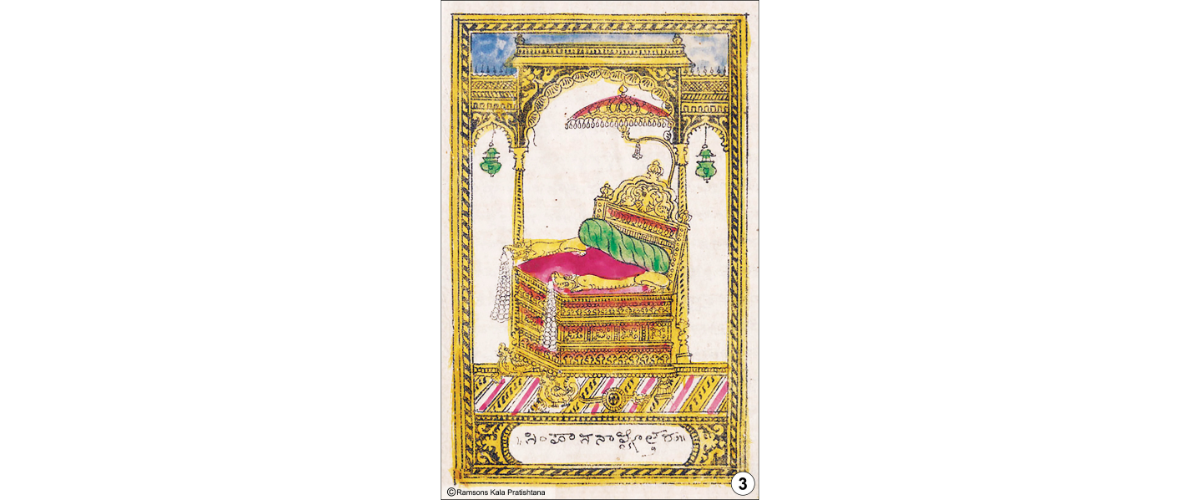
The fabled Mysore throne with its five side steps and railings in its older form as photographed at the dawn of 20th century (Figure 1). This pair of black and white photographs gives us an idea about the opulence and magnificence of this large gold object which was later modified to make it more comfortable to sit cross-legged in Padmasana. The earlier Koormasana had limited space where the King had to sit either in Vajrasana or Veerasana.
A lithograph on display at the Private Museum at the Mysore Palace shows H.H. Krishnaraja Wodeyar III seated in a cramped position at the European Durbar. This could be one reason that the throne was remodelled to make it more spacious and grander. The basic structure and embellishments are similar to the earlier version of the throne.
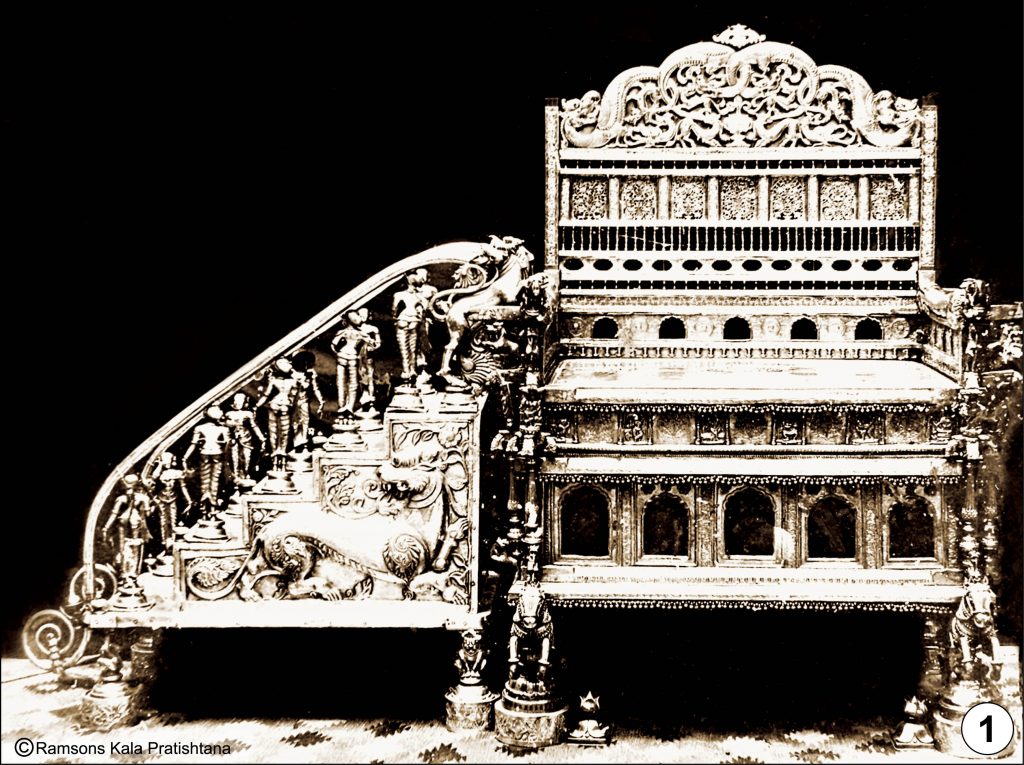
Figure 2. The side view of the throne shows divinities, mithunas and mythical animals worked out in high relief which were later remodelled into Ashtadikpalakas, Trimurthys and many more mythical birds and animals.
The canons of the Manasara, a 600 CE treatise on architecture and sculpture, which contains an entire chapter on thrones, mentions several kinds of thrones. Thrones are symbolic seats of authority and symbolise divinity and power, both cosmic and earthly. There is mention of the Padmasana Throne, which is the ‘Seat of the Gods,’ the Bhadrasana or auspicious throne and the Lion or Simhasana throne which only those kings who had all the royal attributes could ascend. Scriptural canons say that the Bhadrasana throne is used for coronations and the Simhasana throne for royal festivals like the Dasara. The Wodeyars follow the custom to this day.
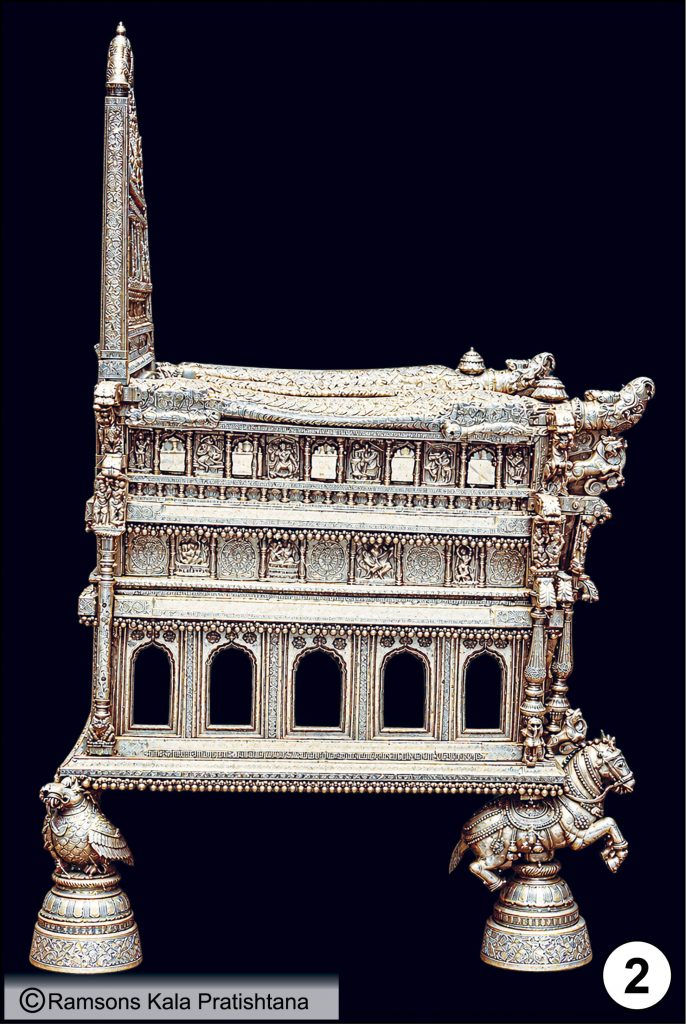
Incidentally, the Devata Nama Kusuma Manjari (Figure 3) a Sanskrit work edited by H.H. Krishnaraja Wodeyar III in 1859 is a compilation of laudatory verse of various deities and royal attributes which includes the throne. The verse on the throne mentions its various names and epithets which invoke celestial beings to impart mystical powers worthy of a King onto the person who sits on it. It also enumerates the names of mythical animals that stand in the eight cardinal directions and also the names of the decorative dolls fixed on the throne.