

By Dr. Mahadeswara Swamy
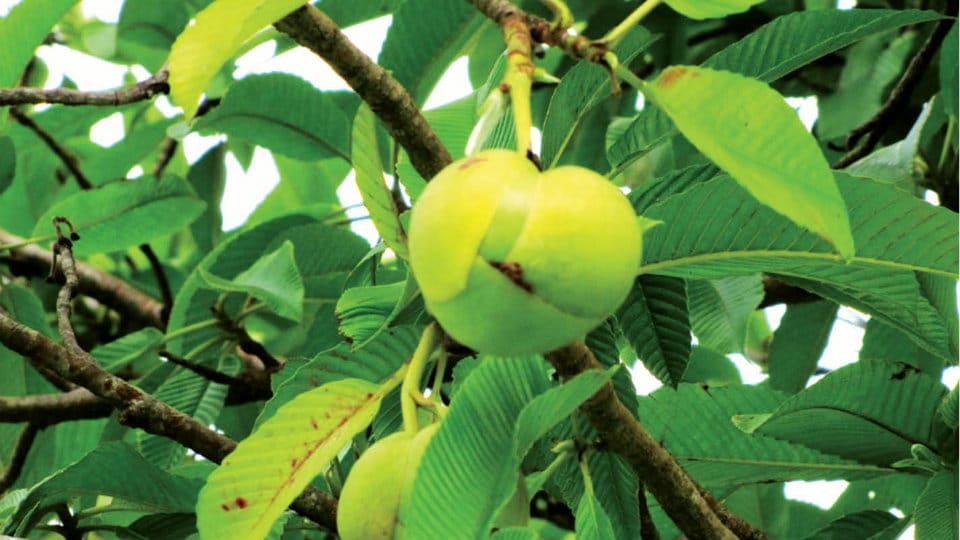
With decorative foliage and fragrant blooms, ‘Elephant Apple’ tree is highly valued for its medicinal properties. The apple-like yellow-green edible fruits of this tree are relished by elephants. Hence the name. In ‘Kannada,’ it is ‘Bettakanigalu.’ Other common names are Indian catmon, Hondapara tree, Ma-tad (Hindi: Chalta, Karambel; Malayalam: Punna, Vazchpunna; Sanskrit: Avartaki, Bhavya, Bharija; Tamil: Kattaral, Ugakkay; Telugu: Revadi). Its scientific name is Dillenia indica L (Family Dilleniaceae) named after German Botanist Johann Jacob Dillenius (‘indica’ is the Latin word for India). The tree is native to forest river banks across tropical Asia to South-East Asia. Being an important source of food for elephants and other animals like monkeys, deer in North-Eastern India, the tree plays a major role in forest ecology. It is an introduced tree to gardens and elsewhere from the forests of North-Eastern India.