

By Girija Madhavan
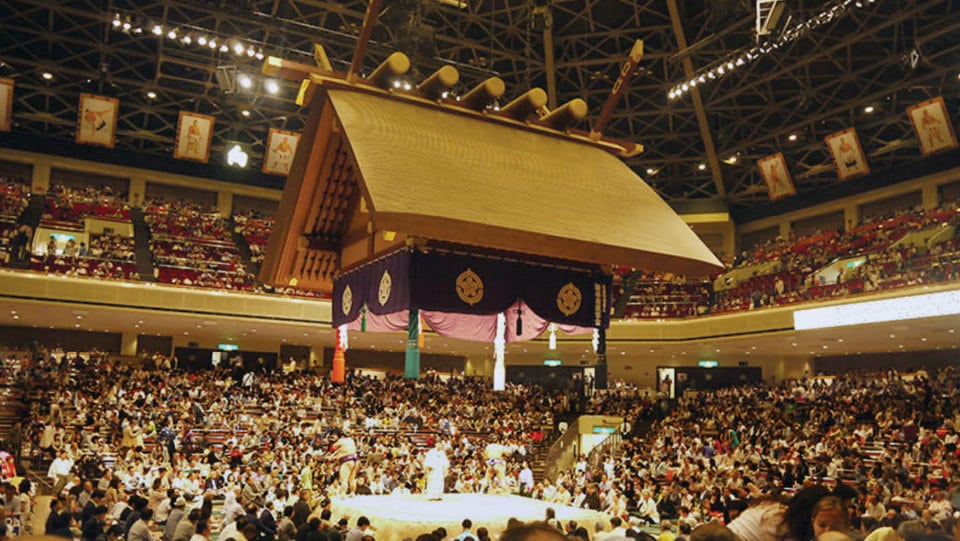
Mysuru is hosting Dasara, its most important festival. Elephants are brought from jungle camps to lend their caparisoned presence to the procession. Parks display pots of salvias, zinnias and dahlias; flower beds of cockscomb, cosmos and chrysanthemums. Traditional sports like “Kusti” are a feature of Dasara. Local wrestlers participate in matches, bringing to my mind the Sumo wrestlers of Japan. The Japanese excel in tennis, golf and baseball. The martial arts of Kendo, Judo, Jujutsu, Aikido or Karate are preserved. Sumo, though not classified as a martial art, has influenced these forms over the years. It is enormously popular in Japan, the unofficial national sport. Sumo tournaments are a spectacle of rituals, colour and ceremony. Two wrestlers of great weight and girth, clad in specially woven silk loin cloths with a heavy belt , face each other on a circular ring, “Dohyo.” It is a platform of packed clay of 4.55 metres in diameter. Above it hangs a replica of the roof of a Shinto shrine. The matches are very short, the victor pushing his opponent out of the ring or causing him to touch the floor of the ring with any part of his body other than the soles of his feet. The wrestlers enter the ring, throw handfuls of salt on it . They start with a crouch and lunge at each other upon the referee’s signal. The referees wear brocaded kimonos and peaked hats and are picturesque themselves, their lives too being committed to Sumo. Other judges sit around the ring to adjudicate if need be. Hierarchy rules the life of the Sumo wrestlers . They are controlled by the “Stable” to which they belong. The wrestler with the greatest number of wins is called “Yokozuna”, the top rank followed by “Ozeki”, “Sekiwake” and lower ranks. Their schedules of exercise, food and appearance are in accordance with tradition, strictly enforced by the Japan Sumo Association. Their hair is combed into a topknot or “Chonmage”. They wear only kimonos in public. Seniors can opt for silk robes of their choice. When shopping or eating out, Sumo wrestlers look like personages transported into the present from the Edo period of Japanese history. When they retire from the ring the topknot is cut off and they are free to wear Western style suits and ties like most Japanese.