
By M.L. Krishnaswami
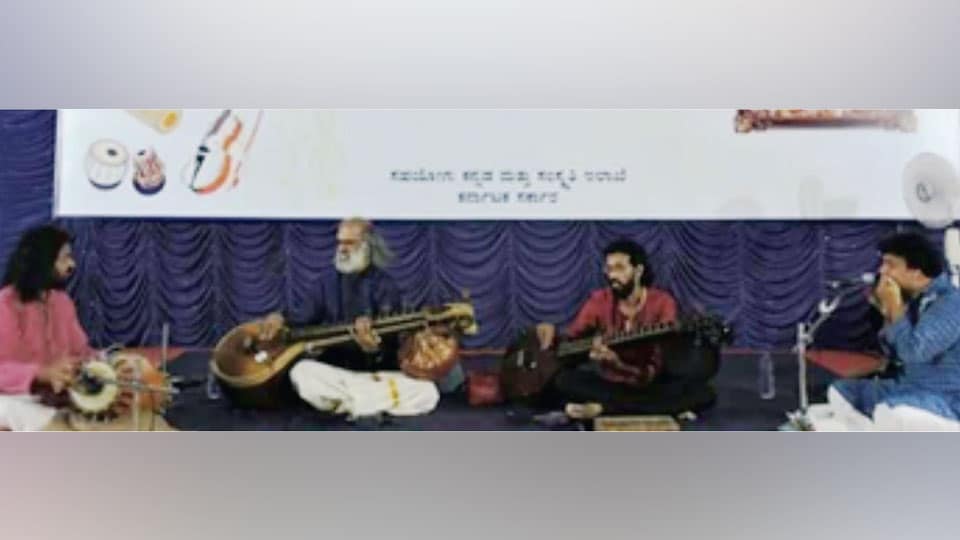
On the ninth of April, the vocal artiste was Vid. Sikkil Gurucharan, a grandchild of one of the famous flautists of yesteryears, Sikkil Sisters. He was accompanied on violin by Vid. Mathur Srinidhi, on mridanga by Vid. Patri Satish Kumar and on khanjira by Vid. Guruprasanna. Vid. Gurucharan is almost an annual number in one or the other Sabha in Mysuru for the Ramanavami festival and every year he has shown a remarkable improvement in his performance thus graduating himself to the top number in the fraternity. In earlier days, musicians would start their repertory with a quick varnam in any raga and invariably the main raga for RTP would be in the same raga. That was the practice with the ever great Ariyakudi, Chembai and GNB. But nowadays, this has been given a go by and in some cases even the Varnam is omitted and the recital is started with a short alapana followed by a number. Times have changed and in many instances even the alapana and the following Keertana are in different ragas. I do not know whether this is a good trend in the development of Karnatak Music. This observation apart. Sikkil Gurucharan strictly adheres to the earlier code except in the end of his concert he sang the pallavi of the famous Tyagaraja number Chakkani raja, while the raga was Natakuranji, a little avoidable deviation, Okay! Natakuranji, a sweet raga, was excellently handled in the alapana portion and violinist Mathur Srinidhi efficiently handled his assignment with quiet and calm. In this, he resembles the famous Papa Venkataramaiah of the by gone music days. Vid. Patri has established himself as a master in his assignment as a mridanga accompanist and the way he quietly and smilingly handles the same instrument reminds us, the connoisseurs of an earlier era, of the famous Palghat Mani Iyer. Vid. Patri easily stole the show. His Tanyavartanam stands out as the best in the series. Vid. Guruprasanna on khanjira was adequate in handling the small musical instrument in one hand and bringing out right notes. Khanjira is a rather difficult instrument as the stroking is done with one hand and the instrument is firmly held in the other.