

By M.T. Yogesh Kumar & Mahesh Hanagodu
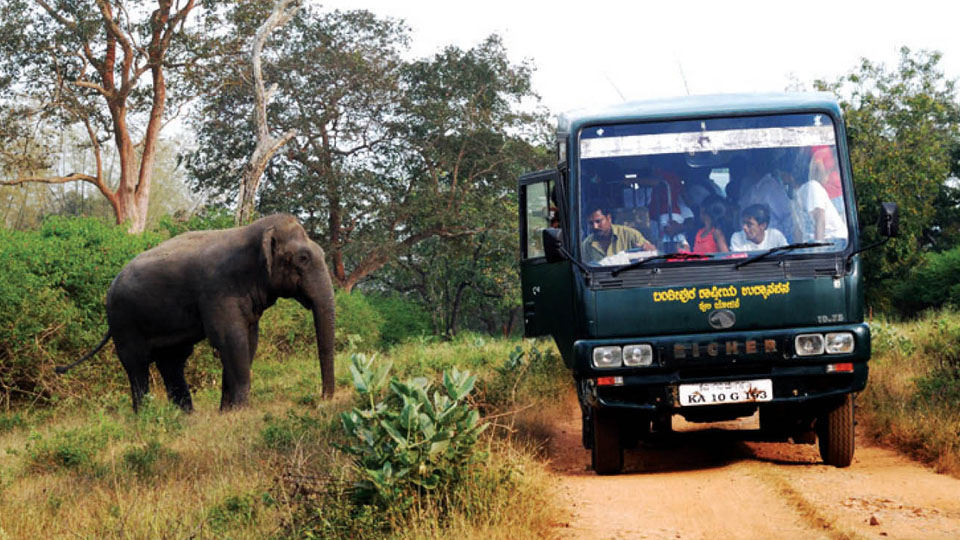
Lush green, not dust and mud, is the dominant colour at Bandipur Tiger Reserve and Nagarahole National Park now, thanks to the rain that has been lashing this vast expanse of forests since the end of May this year. While the pre-monsoon showers in February provided the much-needed relief to the parched jungles and bone-dry lakes and ponds, monsoon has converted the dust-filled swathes into green patches. Rain has arrived early this year and the volume of water coming down from the clouds has increased manifold when compared to the last three to four years. Nagarahole is in the border of Kodagu district that has witnessed more than average rain this monsoon. Normally it would rain by the end of June till about first week of August. Due to this, wild animals from Nagarahole used to venture out of forest area into human settlements in search of food and water every year after December. Last two years were the worst for the animals as River Lakshmanatheertha went dry along with water bodies inside the park including the ones at Chennammanakatte, Erekatte, Mantallikere, Mudaganoorukere, Billenahosahallikere, Bheemanakatte, and Baanerikere. Even the forest department officials are hopeful that the animals, especially elephants, will remain inside the woods without venturing outside as plenty of food is available inside the jungle. The Nagarahole National Park is spread across 643 Square Kilometres and has been divided into 8 Zones - Nagarahole, Kallahalla, Veeranahosahalli, Hunsur, Anechowkur, Antharasanthe, D.B. Kuppe and Metikuppe. Before monsoon, the Forest Department officials had identified certain lakes and had made arrangements to fill water from borewell preventing animals from dying of thirst. Also, due to lack of water, animals would migrate to Kabini Backwaters and some animals ventured into villages destroying paddy and other standing crops. But now with rain, the threat of drought is eliminated, said Madhusudhan, Range Forest Officer, Veeranahosahalli. Speaking to Star of Mysore, Madhusudhan said that they had set up fencing around the forest with waste railway lines and have also dug trenches to prevent elephants from entering villages. Special watch towers have been set up and guards are posted there to minimise man-animal conflict. Only five kilometres of Veeranahosahalli has to be fenced with railway lines and the rest of the fencing has been completed. This can eradicate the wild elephant menace up to 99 percent at Nagarahole, Madhusudhan added.