
By Dr. S.N. Bhagirath, Anaesthesiologist, Bangalore
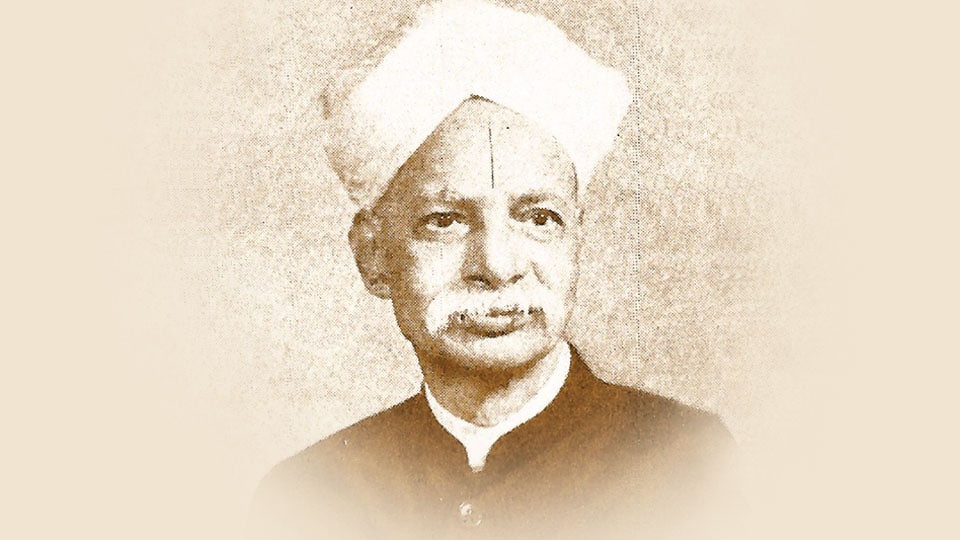
Krishnappa Venkatappa, the renowned artist, painter, sculptor and musician was among the few artists of his time to embody the idealism of the revival movement. His family had come to Mysore from Chitradurga during the reign of Krishnaraja Wadiyar III and were accomplished court painters (chitragaras) who were known for their Gold-leaf work from the days of Vijayanagara Empire. He was born on 23rd June, 1886 at Mysore to Venkatappa and Rangamma. The young Venkatappa would accompany his father to the Palace and thus imbibed a great yearning to pursue in his footsteps. His early education took place at the Government Industrial School in Nazarbad area from 1902-1908. Few years in this period were spent at The Arts School, Madras, which had till 1896, Ernest Havell as its President. From 1909 till 1916, he studied Fine Arts at the Government School of Arts & Crafts, Calcutta, where he came under the tutelage of Principal Percy Brown and Vice-Principal Abanindranath Tagore. About this time, along with Gaganendranath Tagore, he would do a few landscapes of the Himalayas from Darjeeling. In 1910, he was chosen as a member of Lady Herringham’s team of artists for copying the frescoes at Ajanta. During this period, he worked on themes of Ramayana and Mahabharata. His studies of human figures included those of “Pratap Simha,” “Shankaracharya,” “The Buddha with Disciples,” “Damayanti,” “Tipoo Sultan” and “The Persian Lady.” The best remembered of these were those of “Ardhanareshwara” and the “Bengal Floriken” (1910) which won Venkatappa accolades from W. Rothenstein who described it as the perfect realisation of a bird’s figure. His mentor Abanindranath’s short note on “Chitra Shadanga” published in “Prabasi” wherein principles of measurement of art namely “Uttama Navatala Pramana,” “Sama Bhangi” and “Tribhangi” were enunciated had been translated from Bengali to English as “Notes on Indian Artistic Anatomy.” This included beautiful illustrations from Venkatappa and Nandalal Bose. Interestingly, in 1912, while at Calcutta, he came under the influence of Srirangam Rangaswamy Iyengar — a disciple of Veena Seshanna. Having had his first brush with Veena, Venkatappa would be back in Mysore by 1916 and pursued learning Veena under Veena Seshanna for the better part of the next decade till 1927. Incidentally, it was in Veena Seshanna’s company that he would meet M. K. Gandhi for the first time in December of 1924 while at Belgaum. His devotion to music would be reflected in his famous work “Mad after Veena” probably his only autobiographical work.