

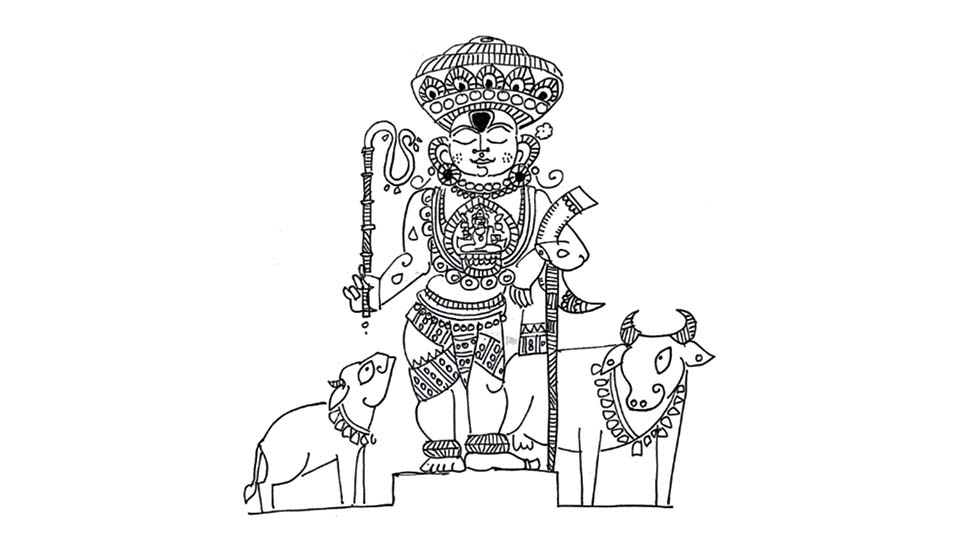
It is a practice mostly seen in South Indian Vishnu temples. After the devotee pays obeisance to the deity (darshan), the priest places a crown on his head. But it is not quite a crown. On top are the footprints of the deity. Since the devotee cannot enter the sanctum sanctorum, which is kept ritually isolated, and touch the feet of the icon within, the deity’s feet are symbolically placed on the devotee’s head. Rituals such as these reveal a lot about Hindu bhakti traditions, which are often linked to India’s feudal traditions, but have a deeper connection with the country’s monastic heritage.
Bhakti originally did not mean submission. It meant participation in the life of the divine. People had long been ‘upasakas’ or worshippers of trees, animals, rocks and saints, as well as ‘shravaka’ or followers of hermits and gurus. This new idea was different. Temples were not serene centres of meditation — where people went to renounce the world. They were different from Vedic yagna-shalas, restricted to priests and their royal patrons. These were centres to celebrate life itself.