


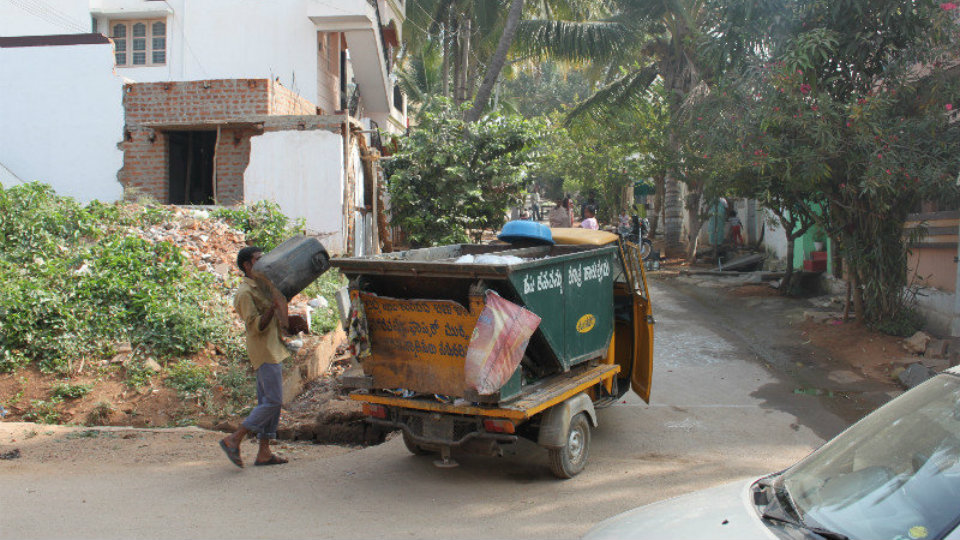
Public gaze on waste, read garbage, particularly in Mysuru and rest of the country as well as the vast space all over the earth in general seems to have faded, but the mounting mass of the undesirable stuff continues to be found wherever one cares to notice. Even the WhatsApp column of this daily, regularly hosting the pictures (with appropriate caption) of dirt strewn by Mysureans in public spaces across the city, including their own neighbourhoods, painstakingly captured by citizens with concern for Swachh Mysuru seems to have earned a reprieve, thanks to the cacophony of the vote-seekers, the wannabe law-makers of the nation. In addition to littering rubbish with gay abandon, the obnoxious habit of well-marked sections among the city’s residents as well as its floating population of about one lakh a day, those with even a semblance of civic sense have to bear the brunt of stench created by the former class of residents seen spitting and urinating without caring two hoots about the damages they are doing to the health of Mysureans.
We are enlightened by scholars that there is hardly any word in Sanskrit language which doesn’t have at least two meanings, one not always close to the other. However, academics enjoy a sense of fascination by extending the meaning of terms in English language beyond the grasp of lay people. One such term, waste, fulfills that feature, while dwelling on the waste of the country’s human resources, lying unharnessed to a great extent.