

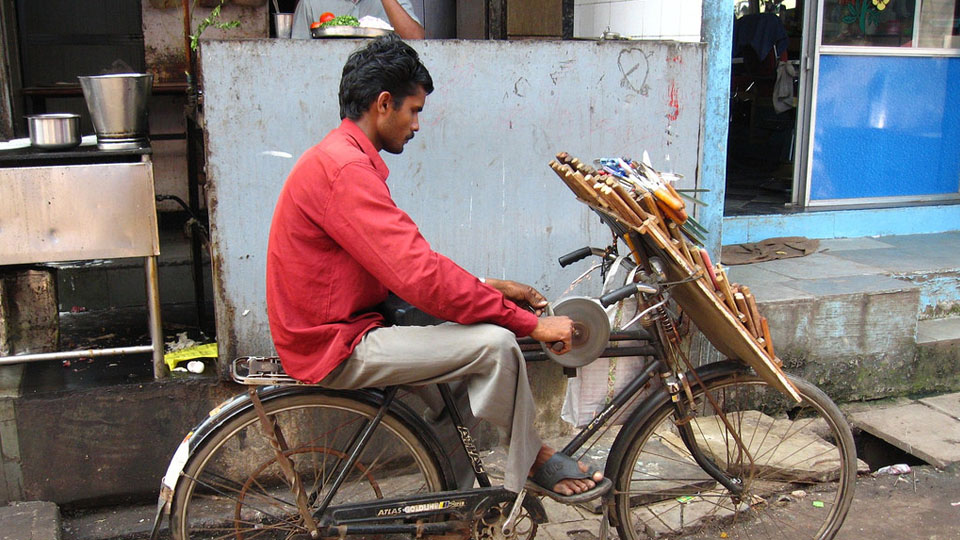

The other day I was at my parents’ house and decided to clean out my old cupboard when I stumbled upon my old school shoe. It was an old pair of black lace up Bata’s. The pair looked like it had gone through multiple surgeries to extend its life; it had white stitches all over and had been resoled. This reminded me how we used to reuse things. When I was in school if I tore my shoe my mother would take them to a cobbler and have them mended. Back then cobblers enjoyed a regular presence in our life. Today we have a throwaway culture, especially among the middle and upper middle class who don’t care to mend because they have money to spend. Earlier one would be happy to get their older siblings’ clothes. Today younger siblings would be embarrassed to be seen wearing used clothes. Also two decades ago many may remember grandmothers would collect old clothes, cut them up and stitch a blanket. Before liberalisation, Indians recycled or reused numerous things. In the 1980s, green whiskey bottles were much coveted and would be reused as water bottles or a vase. Today supermarkets offer such a large selection of plastic and glass water bottles that recycling old bottles is no longer appealing. During my childhood, I remember my father paying a refundable deposit of two rupees for each soda bottle which I would keep an eye on and promptly return to the shop just so that I could buy an ice lolly with the refunded money. This made me fiscally responsible while being environmental-friendly. But then one day came disposable plastic bottles that put an end to my glass-bottle-initiated economy and, of course, my beloved ice lolly. Not just green bottles, our parents would even keep old Kissan jam bottles to store condiments in them. Oil would be bought every month in a 5-litre tin box with a pop up lid. This tin box would later be used to store rice and flour. I remember the chairs in my grandmother’s house with a woven cane mesh. When enough strands had snapped, she would call in a man who would spend a few hours and weave a new mesh! Today cane weavers are on the wane. Kitchen knives would be used for years by giving them a new lease of life every few months. A knife-sharpener would come by on his bicycle and sharpen the knives in just a few minutes. Television sets and mixer-grinders would be repaired. Nowadays, their life span is defined by their warranty period. The Indian middle class had a culture of mending things before spending on a new one. Hell, we would darn torn clothes. Does anyone darn today? In fact, till just a decade ago, when one’s white shirt got a stain, they would simply take it to Sunlight Dry Cleaners and get it dyed black. No one dyes anything today… except perhaps their hair.