

By Dr. Mahadeswara Swamy
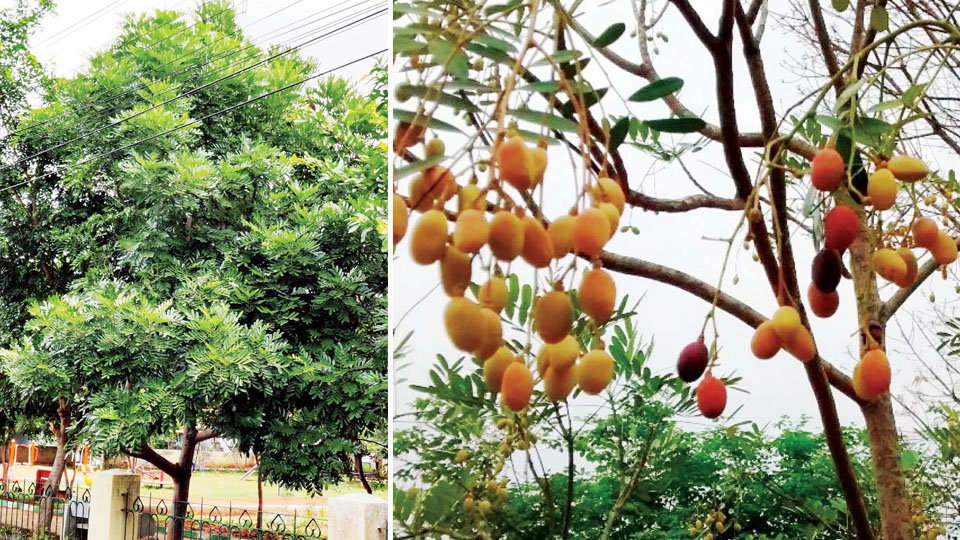
Trees of multi-utility value are grown and managed for more than one product/ output. Commonly known as Multi-Purpose Trees (MPTs), they fulfil several needs of human beings. One such tree is ‘Paradise tree’ also known as ‘Simarouba’, ‘Oil tree’, ‘Dysentery-bark’, ‘Bitterwood’, ‘Aceituno’ etc. It is a versatile tree as almost all plant parts are economically useful (oil production, soaps & detergents, herbal medicine, timber and fuel) besides being ornamental. In India, it is gaining importance as a herbal cure for certain type of cancer(s). Scientific name of the tree is Simarouba glauca belonging to the family Simaroubaceae. It is an introduced tree native to Florida, South America and the Caribbean. It was brought to India by National Bureau of Plant Genetic Resources Research Station at Amravati, Maharashtra, during 1960s. Later (1986) it was introduced to Bengaluru (University of Agricultural Sciences) and extensively studied therein for its utilitarian value.