

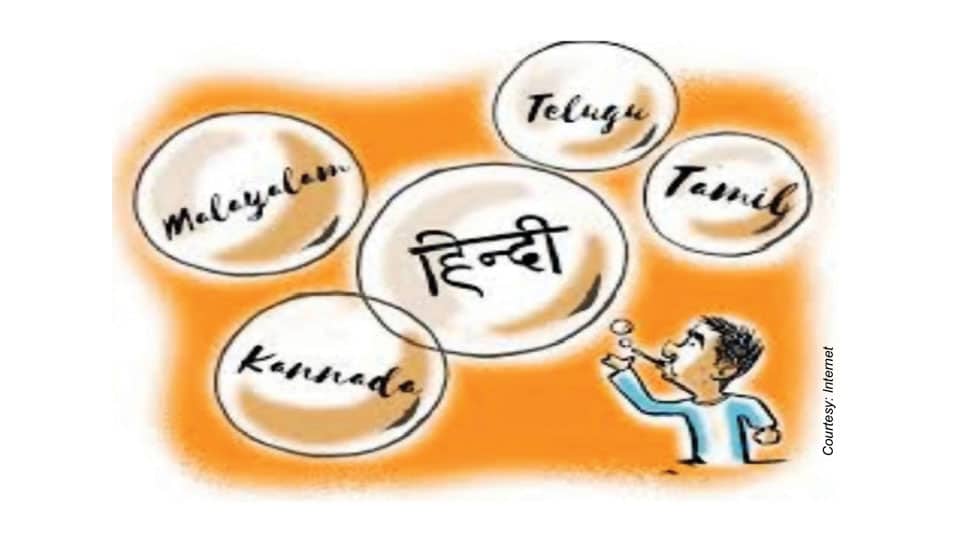
Adults who speak different tongues and the growing children from the stage of a toddler to the school-going age, say three years, who learn to speak in one language or the other fall into different slots. The number of tongues in which the land’s people in different regions interact both verbally and communicate in writing with script that they have used for years makes a fascinating study. The languages which either don’t have their specific script or use the script of different languages are an infinitesimal fraction of the total number of languages that we get to hear in the open space. Much is being made of mother-tongue and medium of instruction in schools in circles of people in public life only to whip up emotions in society. The sense of happiness that one gets when the other person, including strangers, responds in one’s own language cannot be expressed adequately in words. The monumental achievement of unifying hundreds of kingdoms, large-small-tiny by the nation’s first Home Minister seems to have been undone by dividing the nation’s geography into narrow regions on the basis of the languages spoken by the respective area’s population. Division is the end result of that act.
Mysuru, then Mysore, hosted people who spoke different languages without any prejudice or disfavour of tongues of various sections of society, obviously without any public debates on languages of the kind that we observe nowadays. Writers did gift literary works in their respective languages, including Kannada, that continue to be rated high even after several decades. That cannot be said about later generations of the region.