

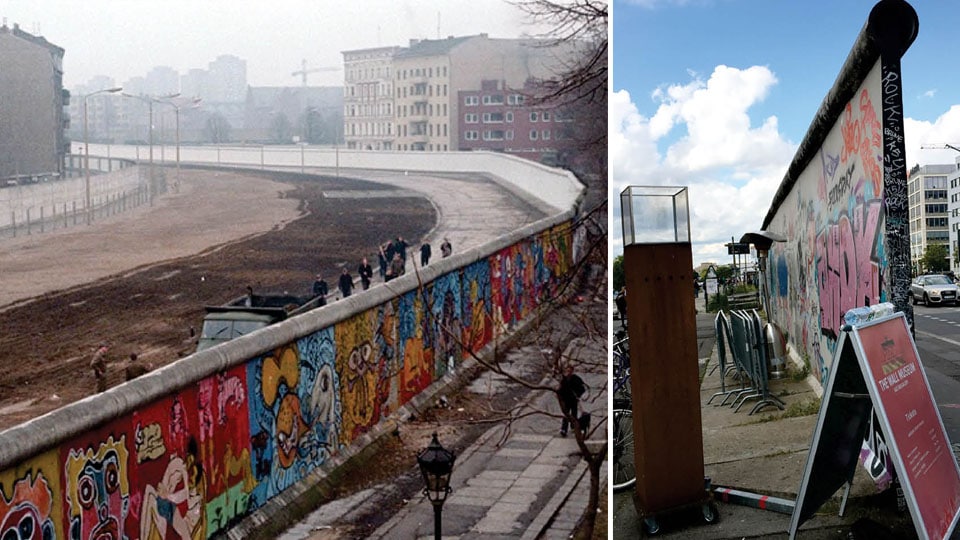

Germany is one country in the world for an Indian that seems to conjure up many images of important persons both in Germany and India. Otto von Bismarck was one such person. It was he who spoke of “blood and iron” and unified Germany as we know today. And in India, we have our own Bismarck in Vallabhbhai Patel, the Deputy Prime Minister in the first Nehru Cabinet immediately after Independence. If Kashmir was a folly, Nehru, not Patel, was responsible, no doubt. Among the other Indian names, how can we forget Subhas Chandra Bose. Our present Netajis surely owe a debt of gratitude to Bose, who was the first person in our political history to be addressed as Netaji, meaning ‘Leader of Leaders.’ These are, of course, ‘duplicate’ or fake Netajis as we have come to know of their true colours. Bose had escaped to Hitler’s Germany from the British India in April 1941, met the Führer, the great leader Adolf Hitler and realising the reluctance or refusal on Hitler’s part to set up a ‘Government of India in Exile,’ left for Japan in a German U-Boat. Rest was history that still strikes the chord of our hearts to this day. There are other two Germans with whom India is connected but each of distinct different persuasion. One is Karl Marx, the German Jew, Father of Communism, who has found a niche in our country at West Bengal and Kerala. The other German was Max Muller, an academician, scholar in India’s sacerdotal language Sanskrit. He translated Upanishads and also the Indian fables called Hitopadesha. He did all his works in English and like Karl Marx never visited India. There is one more German academician, Hermann Hesse, son of two missionaries who worked in India for several years. No wonder he wrote, among other very few books, Siddhartha, not an eponymous title but deals with Buddha’s teachings. Hermann Hesse was awarded Nobel Prize for Literature in 1946. This book was also made into a film — English and Hindi — with Shashi Kapoor . So India’s German connections are well-rooted. Visiting two important cities of such a country was simply enthralling for me — the capital city of Berlin and another historic city Munich.