
By N.K.A. Ballal, Retd. Sr. Vice-President, ITDC
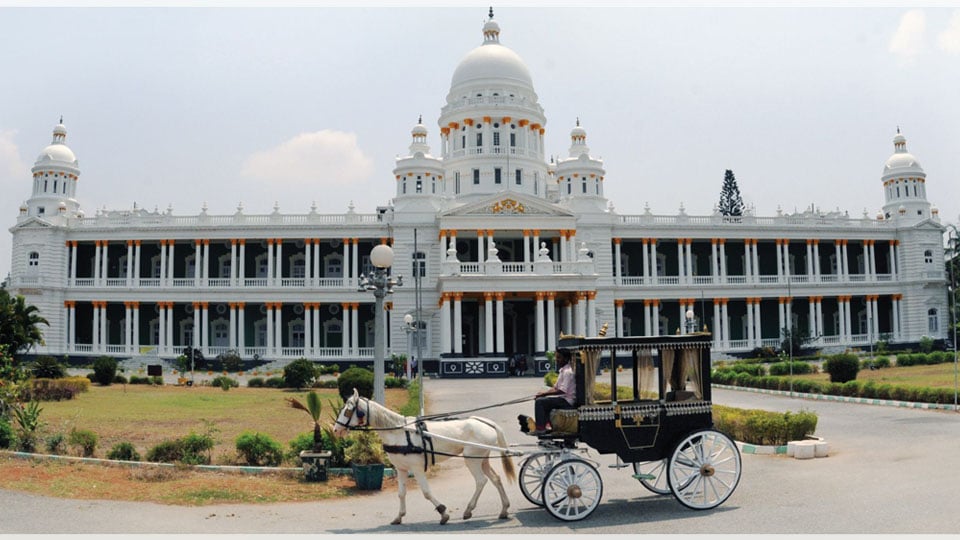
Forty-five-long years. After four-and-a-half decades of service, ITDC would be finally saying goodbye to this great heritage city of Mysuru. As I sat down in the restaurant, savouring my last meal in this great heritage hotel, old memories started passing around — some good, some bad. I thought I should share some of them with SOM readers. This imposing building, modelled after the St. Paul’s Cathedral, London, took about five years to build. A British architect E.W. Fritchley was hired by Krishna Raja Wadiyar, the then king of Mysuru, for the construction of this magnificent structure. This building was built in anticipation of the visit of the Viceroy of India to Mysuru. Later on this became the Guest House of the Maharaja to house his European guests. Except the rose wood, all other building materials were imported — Italian marbles, Belgium glasses, bathtubs, chandeliers, Persian carpets, tiles, the list is endless. The construction was done by one Munivenkatappa. How did this State Guest House become a part of the mighty ITDC in the 70s. Simple: it was the vision of a great Mysurean M.S. Sundara, a Hardwicke School alumni, the then Chairman of ITDC. In the 70s, the tourism industry was at a nascent stage and the government in its wisdom to promote tourism formed the ITDC by amalgamating the Janpath Group of Hotels and The Ashok Group of Hotels. The government mandate was very clear — open up standard hotels in potential tourism cities all over the country. The Southern foray of ITDC was at Bengaluru, Mahabalipuram, Pondicherry, Kovalam, Hassan and lastly Mysuru. Heritage hotel concept itself was an unknown entity. In 1974, Lalitha Mahal Palace, a poorly maintained State Guest House, was handed over to the ITDC for a 49-year lease by the State government. Itdc had a brilliant Project Manager called H.N. Murthy and he was given the responsibility of converting the Guest House into a heritage hotel. He had absolute powers and authority. Itdc also appointed an architect, Rajinder Kumar and Sons, considered a top-notch hotel architect those days. Since there was no drawings of the old building, he also gave up and concentrated only on interiors and colour schemes etc., leaving the rest to the site engineer Murthy. The only way to move forward was by “trial and error” method.